May 11, 2013

PULPFEST: WILLIAM PATRICK MAYNARD

Spy Vibe is going to Pulpfest! I'm looking forward to meeting up with fellow writers and artists and enjoying a weekend filled with vintage books and cliffhanger serials. I'm now finishing my first spy novel and working on a graphic novel, so there will be lots to share. To celebrate the event, I invited some of the special guests to visit Spy Vibe's virtual lair, where we talked about classic pulp characters, collecting, and writing contemporary pulp fiction. Today we feature Fu Manchu continuation author, William Patrick Maynard.

Maynard's passion for writing began in childhood and was fueled by an early love of detective and thriller fiction. He was licensed by Sax Rohmer's Literary Estate to continue the Fu Manchu thrillers. The Terror of Fu Manchu, published in 2009, was a Pulp Factory Awards nominee for Best Pulp Novel. The Destiny of Fu Manchu was published in 2012. Maynard's short fiction has appeared in The Ruby Files (2012/Airship 27), Gaslight Grotesque (2009/EDGE Publishing), and Tales of the Shadowmen (2009/Black Coat Press). William Maynard is a former weekly columnist for The Cimmerian and is currently a weekly columnist for The Black Gate. He has contributed to Blood 'n'Thunder and other periodicals.


Popular fiction fans are currently celebrating the centennial of Sax Rohmer's Fu Manchu. Rohmer first described his infamous character in the short story, The Zayat Kiss: "Imagine a person, tall, lean, and feline, high-shouldered, with a brow like Shakespeare and a face like Satan, a close-shaven skull, and long, magnetic eyes of the true cat-green." Rohmer's tales captured the world's imagination and spawned a hundred years (and counting!) of novels, films, radio dramas, comic books, comic strips, and television shows. One of the great archetypal villains, Fu Manchu may be best remembered from the films starring Boris Karloff and Christopher Lee, but Rohmer's vision of the character, like Fleming's literary James Bond, was more nuanced than his cinematic counterpart. Rohmer published fourteen Fu Manchu books (one posthumously), before passing away at the age of seventy-six in 1959. Two continuation novels were written by Cay Van Ash in the 1980s. The fiendish pulp villain has returned again in William Maynard's official Fu Manchu novels. Sax Rohmer's original novels are currently published by Titan Books


Welcome to Spy Vibe, Bill. When did you first discover the world of pulps? Were there specific characters or images that drew your attention?

I’m not sure at what age I first learned the phrase “pulp fiction.” I was very young. I knew it was the cheap paper the original magazines were printed on, but I was buying Edgar Rice Burroughs and Robert E. Howard paperbacks at an early age. Tarzan and Conan were really my introduction to the form in the 1970s. The great Neal Adams, Boris Vallejo, and Frank Frazetta covers for Ballantine and Ace were what drew me in. Buscema’s Conan and Tarzan for Marvel were actually first for me so blame him and Roy Thomas for all of this.

Were you also a fan of comic books, cliffhanger serials, or old-time radio shows growing up? What were some of your favorites?

I was a big Marvel kid, certainly. I saw cliffhangers on a PBS show called “Matinee at the Bijou” which was a revelation since I knew all about them as a source for Star Wars - Buck Rogers and Flash Gordon being the starting point. My parents were born in the early 1940s so they had some knowledge of this stuff but nothing tangible. It was all something I held onto and guarded fiercely as I sought it out. I’ve become a big OTR fan, but that didn’t come until much later for me.


Did you collect as a kid? What were some of your treasures? What was it about the designs or stories that fired your imagination?

I collected comics and paperbacks as a kid. I had an old fashioned toy box crammed with them for years. I was fortunate there were some great used bookstores and a very good library system when I was growing up. If there had been an internet then, I probably wouldn’t have any Holy Grails left to hunt today. I loved everything from Burroughs and Howard to space fantasy to Tolkien to Planet of the Apes. It was all the same to me. No difference between those or The Incredible Hulk or Godzilla. Those were my classics and I couldn’t rank them had I tried. The design definitely captured me. The usual sex and violence appeal I suppose. A lot of it I liked because it was like looking at our family’s copy of The Children’s Bible, only it was exciting.  Samson was cool, but he had nothing on Hercules or Conan or Kull or Tarzan.

Many of us collected paperback editions of Ian Fleming, Man from U.N.C.L.E., The Avengers, etc. Did you get into this genre?

Spy stuff came later for me. Around age 12 I think. I went nuts about the Connery Bonds and collected Fleming and Gardner. It took years before I finally saw UNCLE or The Avengers. Of course, Bond was quickly overtaken by Sax Rohmer and that blew everything else out of the water for me.

Are there pieces in your collection that you treasure most? Are you still hunting for cool artifacts?

I have lots of treasures. A lot of it has gone to my kids which is nice to see them enjoy it while I’m still here to share it with them. Twice in my life I’ve come close to getting a complete set of Allan Wingate editions of the Fu Manchu books. They’re the only matched hardcover set with dust jackets. I have more than most people believe exist, but I still have a few titles eluding me. There are about five relatively common ones, but the rest were printed in very small numbers apparently. It’s easier finding the limited Bookfinger editions than those.


How much do you look at vintage media as a way to prepare for an assignment?

I do read what people wrote at the time or watch newsreel footage to get a sense of things in their true perspective. Letters can help, if you find them readily enough, but it’s tricky because political correctness wants to rewrite everything. You have to walk a very fine line.

What was your journey from fan to published writer?

Well, I always wrote from the time I was a little kid. Comic books, short stories, plays, scripts, you name it. The thing was I finished very little. I analyzed books and screenplays like crazy to see what worked and what didn’t, but I was undisciplined as a writer. All of this happened on a lark sort of. I wanted to write, but I never expected to make it. There were so many missteps that you write more out of a cathartic need than out of anything else. You write because it’s easier than not writing. That’s the simplest way of explaining it. The discipline part comes in making a coherent story with a beginning, middle, and an end. Without that, it’s easier and more attractive to be promiscuous with your projects starting and discarding one idea for the next while searching for the perfect one.


Did you ever imagine that you would be able to write for iconic characters like Fu Manchu? What have been some of your favorite projects so far?

There was a moment when I was pissed off at a boss I had when I was a kid who laughed at me for reading Sax Rohmer that it crossed my mind that I would show him and write these novels, but I don’t know where the idea came from. A couple years later, a co-worker encouraged me to pursue the rights after reading some humorous send-ups I had written of the character. I did and it all fell together from there. That’s the short version that leaves out the agony of research and rewriting. I think Fu Manchu will always be my favorite project no matter how many different things I’m able to do for the same reason why Rohmer will always be my favorite writer.

How did you first discover Fu Manchu? Are you a fan of the books, serial, films, radio dramas, and TV show?

My discovery of the character was a long one. It started with Marvel’s Master of Kung-Fu title and then a showing of the Karloff Mask of Fu Manchu. Time passed and then when I was about 12 or 13 I saw the first three Chris Lee films and quickly hunted down some Pyramid paperbacks with the great Len Goldberg cover art and then the Zebra reprints started happening. Eventually the paperbacks gave way to A. L. Burt hardcover editions with dust jackets and the P. F. Colllier hardcover editions and on and on. I mainly love Rohmer, but I enjoy the movies and the TV show and the radio show. One of my proudest moments was contributing bonus content to The Serial Squadron’s restoration of the Republic serial, The Drums of Fu Manchu.


Tell us about connecting with Sax Rohmer’s estate and becoming a Fu Manchu continuation author.

It took a lot of patience. For the longest time it was hard to find who to contact. Once I found the right individuals it became a question of a query letter and then a synopsis and sample chapters and making sure you get everything right. The Literary Estate’s job is to protect the property and make sure it is treated the way the author intended. On top of that there is the whole political correctness issue which complicates matters. I have been very, very fortunate to have gone this far and God willing I’ll keep working with them for some years to come. There have only been two authorized writers (myself included) in over 50 years since Rohmer passed away. It’s a matter of luck, timing, and fidelity to the originals. These things generally don’t happen to a kid from Cleveland, Ohio.

Many casual readers will probably think about antiquated notions like “the yellow peril” when they hear the name Fu Manchu. Are there challenges you face as a writer to make the character accessible or to deal with dated attitudes about gender, race, etc.?

Cay Van Ash, the first continuation author who was also Rohmer’s protégé, chose to avoid the matter entirely and not ruffle feathers when he wrote his two books in the 1980s. I took the opposite approach and set out to deal with the Yellow Peril origins when I approached the Estate. Rohmer was certainly a product of colonial thinking, but Fu Manchu is far less offensive in his books than in the comic strips, films, radio show, and television series derived from them. I wanted to deal with the fear and prejudice head on as a plot point. That’s what got the Estate’s attention and, ultimately, won them over I believe.


Can you recall some of the lessons you had to learn when you first began to write?

I’m not done learning! You have to read as much as possible and really understand how it’s constructed and what makes it work. You have to understand your characters’ motivations and find their individual voice. If everyone talks the same, your reader is lost. Construction and character are the two keys. Structuring your story into acts and building action with rhythm is crucial but you’ll only get there from work. Reading your betters and understanding why they’re so good and writing and rewriting until you improve is what it takes. It’s laborious, but you love the result and it’s easier to do it than to stop. Sort of like an old man struggling to breathe.

Richard Sala and I have talked about the conventions that make mystery/adventure stories fun to read. Are there conventions that you love to include in your writing?

Overall, I like to look at what my characters believe or don’t and why. How their childhoods shaped them or misshaped them. How their sexual experiences shaped them or misshaped them. That’s what makes people tick to me and it helps readers understand them as flesh and blood rather than stereotypes. If I’m writing in period, and I usually do these days, I like to absorb what different political views were at the time rather than how we look back on it now. That’s a tricky point because it often makes people uncomfortable. You don’t like nice people to sympathize with the Nazis, for instance, but it happened particularly before the war.

Are there other properties that you would love to work on in the future?

I tell myself I don’t want to fall into that trap of only dreaming other people’s dreams, but I’d love to take a crack at Flash Gordon. It’s the only property I think I’d kill for and I selfishly believe few people get what made it great.


You mentioned Dr. Phibes on your blog. I really enjoy those Vincent Price films for their Pop Art sensibility and dark humor. Are you a fan of the broader genre of super criminals like Fantomas, Mabuse, Kriminal, and Diabolik?

Phibes is special and I’m happy to see he’s back in literary form at least. I am a huge Fantomas fan. I’m very proud to have had a Fantomas story published a few years ago in one of the Tales of the Shadowmen anthologies. Even more, I’m proud I’m listed in the acknowledgements in the massive omnibus of the first half-dozen books or so that was published for the centennial. That sort of thing still sends a shiver down your spine. It’s like a vindication of all those years spent chasing shadows where everyone else thought you were wasting your time. I dearly love Mabuse, particularly the three Fritz Lang films. I have aspirations for the property, but not writing new adventures. Hopefully this will make sense later.


Pulp stories that take place in the past seem to offer a satisfying cocktail of inventiveness, innocence, empathy, and mystery. Do you think pulps endure because our modern culture lacks some of these qualities?

The strange thing about fantastic fiction from Victorian times through the pulp era is most of it was written with contemporary settings. Slowly that has largely transferred to nostalgia for times past. You can still tell these stories in contemporary settings, but it’s easy to let forensics, sex crimes, drug dealers, terrorist attacks, etc. spoil the fun. There’s a point where it becomes too real and no longer escapism. I would say that’s the key. If you can keep your reader entertained, the setting can be past, present, or future. The second you’re stealing headlines, you’re no longer embracing what pulp fiction is all about.

Obscure movie reference question: Fellini had a female character (Volpina the prostitute) on the beach in Amarcord shout “Fu Manchu” to the wind, which never quite made sense to me. What do you make of it?

God, it’s been ages since I went through my Fellini phase and like any addict I have to be careful not to relapse. The meaning, since the film, like much of Fellini’s work, is about remembrance, is probably significant in having the sexy femme fatale character shout the name. She’s drawn to danger whether she means a local man or Rohmer’s work. In pulp terms, sex outside of marriage equates danger because the women are exotic and not safe and normal like the good girls. “Flash Gordon” follows the same formula very closely. That’s what I would suggest Fellini was deliberately evoking having that character shout the name. I could point out how much Dino DeLaurentiis’ campy “Flash Gordon” movie resembles a Fellini film, but that’s just asking for trouble.


What projects do you have coming out next?

We should have an original project, The Occult Case Book of Shankar Hardwicke out this year and The Triumph of Fu Manchu next year. After that will be a hardboiled detective novel called Lawhead and a collection of short stories. I’ll be kept busy.

Many pulps and classic genre work has been reissued or released. Do you have beloved characters, stories, or shows that still wait for official release?

I would love to see the complete Richard Diamond, Private Detective series with David Janssen turn up including the rare pilot with Don Taylor in the role. In a perfect world, everything would be available for everyone to enjoy. That’s probably my ideal concept of heaven. It would be one big library with everything ever written or filmed in perfect condition. What could be better?

Thanks, Bill! Spy Vibers who are interested in learning more about current publications of classic characters like Fu Manchu, Lupin, Fantomas, and Judex should check out Black Coat Press here. Pulpfest will be held this summer July 25th-28th. Details here.


Check Spy Vibe for recent posts about our fiendish villains archiveMan From UNCLE manga. new James Bond omnibusOrson Welles the Shadow, rare Piero Umiliani Kriminal soundtrack, new Beatles Yellow Submarine game, James Bond audio book re-issues, Mid-Century Modern in PeanutsRalph Byrd Dick TracyThe Saint, Op Art, Thomas Allen pulp art, The Shadow, Operation Kid Brother (MST3K), 1960s espionage writers, my review of SKYFALL, 007 at the Intnl Spy Museum, and more. Spy Vibe is now on Pinterest! Check out our image archives and follow us here.

Ian Fleming on Spy Vibe: recent posts include Ian Fleming Music Series links: Noel CowardWhispering Jack SmithHawaiian GuitarJoe Fingers Carr, new Ian Fleming Catalogdiscovery of one of Ian Fleming's WWII Commandos, James Bond book coversIan Fleming's Playboy interview for Kindle, Spy Vibe's discovery of a rare Ian Fleming serialization, Fleming's Royal gold typewriter, Ian Fleming's memorial address, and our Ian Fleming image archive link here. 

Can you help to support Spy Vibe? Please make a small donation with our secure Paypal tip-jar link at the top left of the main page. Nothing is too small to help cover the increasing bills for the domain, web-forwarding and other costs to maintain the site. Thank you! 

May 10, 2013

SPY RELEASES

Screen Archives Entertainment regularly solicits new releases and spotlights rare and interesting films and soundtracks. Spy Vibe reported last week that SAE has continued their efforts to track down and release rare Kriminal/Satanik scores- the newest remastering project was composed by Piero Umiliani! This week SAE have solicited a few projects that might appeal to Spy Vibers. 

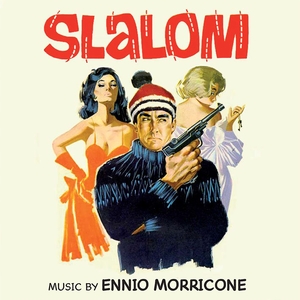
Fans of maestro Ennio Morricone can look forward to the rare soundtrack to Slalom, an espionage film made during the spy boom of 1965, starring Vittorio Gassman and those spy-regulars, Adolfo Celi and Daniale Bianchi (were they in everything?). The CD was released on May 7th and does not appear to be a limited edition. 


From SAE: "SLALOM (aka SNOW JOB, aka EL OCTAVO HOMBRE), 1965, Luciano Salce movie director, a mix of spy and comedy, starring Vittorio Gassman, Beba Loncar, Adolfo Celi, Emma Danieli, Daniela Bianchi. Lucio Ridolfi (Gassman), along with his wife and a couple of friends, is going to Sestriere on Christmas holidays. In search of extramarital affaire, Lucio notices a beautiful and mysterious foreign girl that will cause him a series of strange adventures and involving him in an intricate international conspiracy against his will. During an excursion on the snow he is hit and kidnapped. When he comes back to his senses he finds himself on a plane to Cairo with a passport in the name of a foreign citizen, and beside him- a woman who claims to be his wife! Ricordi Records issued a 45 rpm single (SRL 10-397) with two tracks, Slalom and Sestriere, where all the creative talent of Ennio Morricone mixes with the fabulous choir of Cantori Moderni di Alessandroni, in their sparkling performance of the main themes. For this new stereo and mono album, the master tapes of the original session have been digitally restored, for a real blast from the past. The refined compositions of Maestro Morricone ranging from jazz to lounge atmospheres of mystery and suspense, with ethnic elements of Middle Eastern culture, typical of espionage and action movies." Screen image below from the Lucid Nightmare here.


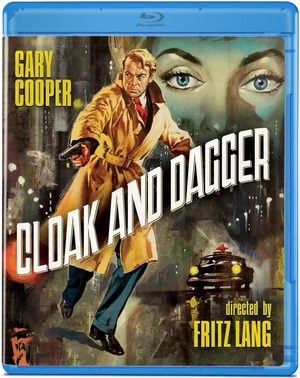
If you have a taste for great pre-1960s thrillers, check out Cloak and Dagger (1946), a new hi-def print of a classic by the master himself, Fritz Lang (Metropolis, M, Spies, Man Hunt). From SAE: "From legendary director Fritz Lang (Metropolis) comes an engrossing spy thriller years ahead of its time. Gary Cooper (High Noon) is an American physicist, parachuted into war-torn Nazi Germany to obtain military secrets. But the deeper he probes, the deadlier his mission becomes… especially when his involvement with the beautiful and mysterious Lilli Palmer (Body and Soul) catapults him into an intense maelstrom of danger, betrayal and murder. Two of the film’s best features are the terrific black-and-white cinematography by Sol Polito (Sergeant York) and the rousing score by legendary composer Max Steiner (Gone with the Wind)." Cloak and Dagger was released on April 30th by Olive Films. Review here. Amazon link here. And for my old schoolmates who may be confused, the 1984 film Cloak and Dagger here


For some reason, SAE has also featured the 2011 Blu-ray edition of Orson Welles' thriller, The Stranger in their recent product blast. Although Welles himself never spoke highly of the film, it remains a beloved classic that is carried by the heavyweight talents of Orson Welles and Edward G. Robinson. The Stranger is an old favorite of mine! As far as I can tell, this Blu-ray edition is from Film Chest Media, who did minor restorations from a public domain 35mm print (review here). Spy Vibe's tribute to Orson Welles and The Shadow here. 


From SAE: An "ex-Nazi war criminal assumes a new identity and a new life in suburban America following World War II. But an agent from the U.N. s War Crimes Commission is on his tail, threatening to expose the lurid past and true identity he keeps secret. Orson Welles directs and stars as Charles Rankin, a professor residing in a quiet Connecticut town with his new American wife, Mary (Loretta Young). Rankin has held strong to his fascist ideals but left nary a shred of evidence, not even a photograph, to identify him as the notorious Franz Kindler. Mr. Wilson (Edward G. Robinson), the man determined to find him, has a plan. But when that plan disappears in the woods, Wilson is left with little hope of convincing the townspeople, or Kindler s naive new wife, who this stranger in their midst really is." 


Check Spy Vibe for recent posts about our fiendish villains archive, Man From UNCLE manga. new James Bond omnibusOrson Welles the Shadow, rare Piero Umiliani Kriminal soundtrack, new Beatles Yellow Submarine game, James Bond audio book re-issues, Mid-Century Modern in PeanutsRalph Byrd Dick TracyThe Saint, Op Art, Thomas Allen pulp art, The Shadow, Operation Kid Brother (MST3K), 1960s espionage writers, my review of SKYFALL, 007 at the Intnl Spy Museum, and more. Spy Vibe is now on Pinterest! Check out our image archives and follow us here.

Ian Fleming on Spy Vibe: recent posts include Ian Fleming Music Series links: Noel CowardWhispering Jack SmithHawaiian GuitarJoe Fingers Carr, new Ian Fleming Catalogdiscovery of one of Ian Fleming's WWII Commandos, James Bond book coversIan Fleming's Playboy interview for Kindle, Spy Vibe's discovery of a rare Ian Fleming serialization, Fleming's Royal gold typewriter, Ian Fleming's memorial address, and our Ian Fleming image archive link here. 

Can you help to support Spy Vibe? Please make a small donation with our secure Paypal tip-jar link at the top left of the main page. Nothing is too small to help cover the increasing bills for the domain, web-forwarding and other costs to maintain the site. Thank you! 

May 8, 2013

U.N.C.L.E. AND BATMAN MANGA

Takao Saito, creator of Golgo 13, adapted James Bond and The Man From U.N.C.L.E. for the Japanese manga market in the 1960s. The stories were serialized in comic digests and collected for release as paperbacks. Saito's spy manga are some of the hardest artifacts to track down and it's a rare treat when collectors get to see examples of this work. The James Bond and U.N.C.L.E. books rarely appear on eBay and tend to be listed between $100-$300. Here are some rare examples of Saito's U.N.C.L.E manga, Napoleon Solo. It's fun to see how Saito fashioned the characters in the style of Golgo 13 and brought familiar secret agents into the dynamic world of his comic pages. It has been suggested that the style of Golgo 13 was derived from these earlier spy manga, which may have been cancelled due to legal issues. I'd love to see a large collection translated into English in the style of Chip Kidd's Batmanga (hear that, Chip?). Incidentally, Batman appeared alongside Solo in Shonen Magazine and I have included some pages by Jiro Kuwata below. 


Check Spy Vibe for recent posts about our fiendish villains archive, new James Bond omnibusOrson Welles the Shadow, rare Piero Umiliani Kriminal soundtrack, new Beatles Yellow Submarine game, James Bond audio book re-issues, Mid-Century Modern in PeanutsRalph Byrd Dick TracyThe Saint, Op Art, Thomas Allen pulp art, The Shadow, Operation Kid Brother (MST3K), 1960s espionage writers, my review of SKYFALL, 007 at the Intnl Spy Museum, and more. Spy Vibe is now on Pinterest! Check out our image archives and follow us here.


Ian Fleming on Spy Vibe: recent posts include Ian Fleming Music Series links: Noel CowardWhispering Jack SmithHawaiian GuitarJoe Fingers Carr, new Ian Fleming Catalogdiscovery of one of Ian Fleming's WWII Commandos, James Bond book coversIan Fleming's Playboy interview for Kindle, Spy Vibe's discovery of a rare Ian Fleming serialization, Fleming's Royal gold typewriter, Ian Fleming's memorial address, and our Ian Fleming image archive link here. 


Want to support Spy Vibe? Please make a small donation with our secure Paypal tip-jar link at the top left of the main page. Nothing is too small to help cover the increasing bills for the domain, web-forwarding and other costs to maintain the site. Thank you! 
May 7, 2013

NEW JAMES BOND OMNIBUS

A new James Bond omnibus is scheduled for release on May 21st. Published by Thomas & Mercer, the mystery and thriller imprint of Amazon, the James Bond Collection with include three original Ian Fleming novels: Dr. No, Casino Royale, and Diamonds Are Forever. Amazon has finally released the cover design (below). The jacket does not follow Amazon's modern/abstract motif used for previous Fleming books. Spy Vibers may be reminded of the recent Bond releases in French, which used a similar silhouette and texture concept. Amazon picked up the North American rights to Ian Fleming's books last year and recently released his fiction and non-fiction titles as print and Kindle editions. 


Check Spy Vibe for recent posts about our fiendish villains archive, Orson Welles the Shadow, rare Piero Umiliani Kriminal soundtrack, new Beatles Yellow Submarine game, James Bond audio book re-issues, Mid-Century Modern in PeanutsRalph Byrd Dick TracyThe Saint, Op Art, Thomas Allen pulp art, The Shadow, Operation Kid Brother (MST3K), 1960s espionage writers, my review of SKYFALL, 007 at the Intnl Spy Museum, and more. Spy Vibe is now on Pinterest! Check out our image archives and follow us here.

Ian Fleming on Spy Vibe: recent posts include Ian Fleming Music Series links: Noel CowardWhispering Jack SmithHawaiian GuitarJoe Fingers Carr, new Ian Fleming Catalogdiscovery of one of Ian Fleming's WWII Commandos, James Bond book coversIan Fleming's Playboy interview for Kindle, Spy Vibe's discovery of a rare Ian Fleming serialization, Fleming's Royal gold typewriter, Ian Fleming's memorial address, and our Ian Fleming image archive link here.

Want to support Spy Vibe? Please make a small donation with our secure Paypal tip-jar link at the top left of the main page. Nothing is too small to help cover the increasing bills for the domain, web-forwarding and other costs to maintain the site. Thank you!

May 6, 2013

ORSON WELLES TRIBUTE

Orson Welles was born on this day in 1915. A celebrated as a child prodigy by Life Magazine, Welles bluffed his way into early opportunities and let his uncanny talent carry him to stardom. Actor extraordinaire, writer, director, producer, and innovator, he quickly had his hands in many historic projects and worked with a long-term company of brilliant artists. Orson Welles is best known, of course, for his film Citizen Kaine (1941), which is still cited as the greatest American film ever made. Welles enjoyed great freedom and control on the project, a level of power that would elude him thereafter and cause years of frustration and financial insecurity. Any period of Orson Welles is fascinating and worth exploring. Spy Vibers will naturally enjoy his crime-related films, Lady From Shanghai (1947), Mr. Arkadin (1955), The Third Man (1949), Touch of Evil (1958), The Trial (1962), The Stranger (1946), and F is For Fake (1975). His Shakespeare is legendary. But fans Old Time Radio like me will always remember Orson Welles fondly as... The Shadow!


For me, Orson Welles' golden period is summed up by an old story that was often told about his radio career in the 1930s. There was a period when Welles had starring roles (and often leadership responsibilities) at major programs being produced at different radio stations. The common version of the tale is that he would rush from station to station in an ambulance so that he could get across town in time for each broadcast. He needed no rehearsals. He was just that good. I love the idea of Orson Welles wrapping something like War of the Worlds (October 1938), and then rushing through traffic, grabbing his script as he ran through the door, and stepping up to a microphone just in time to deliver his lines as pulp hero, The Shadow! 

Orson Welles was interviewed over many years by director Peter Bogdanovich. There were tapes available at one point, and the transcripts were published as This is Orson Welles. Welles was such a raconteur and brilliant mind that the book is truly exhilarating and inspiring. In the interviews, they discuss this famous story about his radio days:

OW: Soon I was doing so many [shows] that I didn't even rehearse. I'd come to a bad end in some tearjerker on the seventh floor of CBS and rush up to the ninth (they'd hold an elevator for me), where, just as the red light was going on, somebody'd hand me a script and whisper, "Chinese Mandarin, seventy-five years old," and off I'd go again. Some days I had to commute between the networks by ambulance...

PB: It was in those years that you did The Shadow.


OW: Lamont Cranston, that was me.

PB: You didn't write those things?

OW: My God, I didn't even know what was going to happen to me while I was in 'em. Not rehearsing- which was part of my deal with Blue Coal- the sponsor, made it so much more interesting. When I was thrown down the well or into some fiendish snake pit, I never knew how I'd get out. 

PB: You had nothing to do with that marvelous opening speech-

OW: "Who knows what evil lurks in the hearts of men...?" Well, I said it every week for years.

Orson Welles landed the role of The Shadow at the age of 22. He played the famous mystery hero from September 27th, 1937 to March, 1938. Other notable radio performances include Mercury Theater on the Air (1938-1940), Ceiling Unlimited (1942-1943), The Lives of Harry Lime (1951-1952/based on The Third Man), and The Black Museum (1952). You can learn all about The Shadow from Martin Grams here


Check Spy Vibe for recent posts about our fiendish villains archive, rare Piero Umiliani Kriminal soundtrack, new Beatles Yellow Submarine game, James Bond audio book re-issues, Mid-Century Modern in PeanutsRalph Byrd Dick TracyThe Saint, Op Art, Thomas Allen pulp art, The Shadow, Operation Kid Brother (MST3K), 1960s espionage writers, my review of SKYFALL, 007 at the Intnl Spy Museum, and more. Spy Vibe is now on Pinterest! Check out our image archives and follow us here.

Ian Fleming on Spy Vibe: recent posts include Ian Fleming Music Series links: Noel CowardWhispering Jack SmithHawaiian GuitarJoe Fingers Carr, new Ian Fleming Catalogdiscovery of one of Ian Fleming's WWII Commandos, James Bond book coversIan Fleming's Playboy interview for Kindle, Spy Vibe's discovery of a rare Ian Fleming serialization, Fleming's Royal gold typewriter, Ian Fleming's memorial address, and our Ian Fleming image archive link here.


Want to support Spy Vibe? Please make a small donation with our secure Paypal tip-jar link at the top left of the main page. Nothing is too small to help cover the increasing bills for the domain, web-forwarding and other costs to maintain the site. Thank you!
May 5, 2013

MID-CENTURY MODERN AT CHARLES SCHULZ MUSEUM

I went to a special preview for members to see the new Mid-Century Modern exhibit at the Charles Schulz Museum on Saturday. The central rotating gallery had been transformed into a stylish walk through the post-war lifestyle that Schulz and so many others embodied. In partnership with the Eames family, Herman Miller, and local designers, they were able to display many vintage pieces. Mock rooms and artifacts from Schulz's family circa 1955 came together to illustrate elements of the growth of leisure culture in America during the period. The exhibit featured evidence of Mr. Schulz's hobbies, like bowling, billiards, abstract art, listening to records, riding bicycles with the kids, and spending time by the pool. Schulz's first wife, Joyce, was famously enthusiastic about architecture and design. From the early 1950s through the later building of their Sebastopol home, Joyce had a keen eye for modern drapery, furniture, and what the Saturday Review called "simplicity amid sophistication." Here are two snapshots to give readers a taste of the room designs in the exhibit. One really has to be there, taking in the many displays and small collection of comics -all set to the sounds of Dave Brubeck, Stan Getz, and Miles Davis- to truly appreciate what the museum has achieved. 

The museum's gift shop featured some cool new products inspired by the exhibit, including retro-design Peanuts handkerchiefs, shirts, and coasters. Stay tuned to Spy Vibe for a chance to win free coasters! See the museum's website for details about all current exhibits here. My original announcement for the show below.


As a cartoon art teacher I always include a brief history of comic strips and comic books in my classes. Students are often amazed to see original sunday pages from the early days because newspapers printed the strips so large. Even if they don't know the comics, it's impressive to see an entire newspaper page devoted to the likes of like Dick TracyFlash Gordon, and Buck Rogers. To them, the art seems more akin to comic books than the strips they knew growing up. I ask them why, and with a little prodding, they start to notice the details in the backgrounds, the figures, and in the shading. What lovely cross-hatching! Around the mid-century, editors wanted to increase readership by offering more strips without necessarily devoting more pages to the funnies. The solution was to shrink down the size of the art and put more titles on each page. Deprived of the full space, all that cross-hatching and careful detail blocked up and became obsolete. The design approach had to change to express not only the size limitations of printing, but to catch up with the sensibilities of the post-war. After all, this was not the era of pre-war parlors weighted down by heavy furniture and ornate decor. There was a new generation who ushered in aesthetics based on clean minimal forms and what Hefner called the personal utopia. Along with innovators in architecture and design, comic creators also needed to reflect this shift to survive (and fit) on the page. Two groundbreaking strips began in 1950 that were perfectly tailored for modern demands: Beetle Bailey by Mort Walker (my book about Mort Walker on Amazon here) and Peanuts by Charles Schulz. Between May 4th and October 27th 2013, The Charles Schulz Museum in Santa Rosa will be running a special exhibit called Mid-Century Modern.


In the museum's brochure, Trope Group owner Christina Pratt points out that Schulz's panels offer us a window into his home. In one cartoon printed for the show, she points out that we can see Bonet's BKF Chair (1938) and the famous Molded Plywood/Low Side Chair by Eames (1946). Pratt writes that the exhibit will feature other Herman Miller licensed designs by Charles and Ray Eames, Isamu Noguchi, George Nelson, and others. I think visitors will see not only a time-capsule of Mid-Century Modern design, but also how Schulz (and Walker) created comics in the same wave of simple and playful lines. Don't miss it! On a side note, I will be the artist-in-residence at the Charles Schulz Museum in June. You can see a photo of my boyhood dream coming true- to sit at Schulz's drawing table- here


Check Spy Vibe for recent posts about our fiendish villains archive, rare Piero Umiliani Kriminal soundtrack, new Beatles Yellow Submarine game, James Bond audio book re-issues, Mid-Century Modern in PeanutsRalph Byrd Dick TracyThe Saint, Op Art, Thomas Allen pulp art, The Shadow, Operation Kid Brother (MST3K), 1960s espionage writers, my review of SKYFALL, 007 at the Intnl Spy Museum, and more. Spy Vibe is now on Pinterest! Check out our image archives and follow us here.

Ian Fleming on Spy Vibe: recent posts include Ian Fleming Music Series links: Noel CowardWhispering Jack SmithHawaiian GuitarJoe Fingers Carr, new Ian Fleming Catalogdiscovery of one of Ian Fleming's WWII Commandos, James Bond book coversIan Fleming's Playboy interview for Kindle, Spy Vibe's discovery of a rare Ian Fleming serialization, Fleming's Royal gold typewriter, Ian Fleming's memorial address, and our Ian Fleming image archive link here.


Want to support Spy Vibe? Please make a small donation with our secure Paypal tip-jar link at the top left of the main page. Nothing is too small to help cover the increasing bills for the domain, web-forwarding and other costs to maintain the site. Thank you!